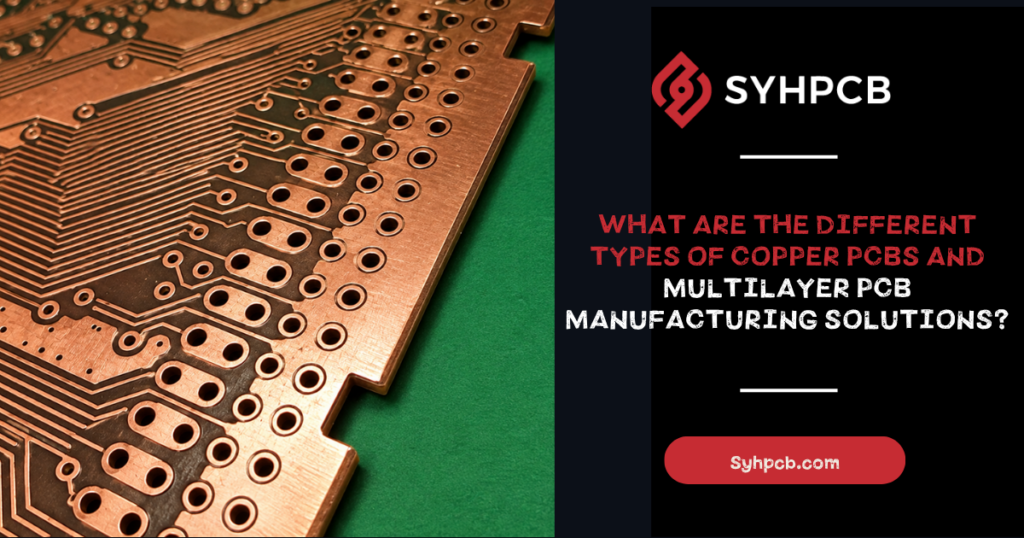
Copper plays an important role in printed circuit board manufacturing because it provides the conductive pathways required for electrical connections. Depending on an application’s power requirements, circuit complexity, and thermal performance needs, manufacturers use different copper thicknesses and PCB structures.
From heavy-copper PCBs to multilayer and flexible PCBs, selecting the right configuration is essential to developing reliable electronic products.
For businesses looking for a suitable copper PCB manufacturer or multilayer PCB manufacturer, understanding these technologies can help simplify manufacturing decisions.
What Is a Copper PCB and Why Is Copper Important?
A copper PCB is a printed circuit board that uses copper layers to create conductive pathways between electronic components. Copper thickness, typically measured in ounces per square foot (oz/ft²), influences current-carrying capacity and other electrical and thermal characteristics.
Copper is widely used in PCB manufacturing because of its electrical conductivity and suitability for different circuit designs.
The appropriate copper thickness depends on factors such as operating current, trace width, temperature rise, and board design.
What Is a Heavy Copper PCB?
A heavy copper PCB uses thicker copper layers than conventional PCB designs. It is commonly selected for applications involving higher current loads, power distribution, and demanding thermal requirements.
Manufacturing heavy copper PCBs requires careful control of copper thickness, trace geometry, plating, and other fabrication parameters.
Common applications include:
- Industrial power supplies.
- Power conversion equipment.
- Automotive electronics.
- Battery management systems.
- Industrial control systems.
- Power distribution circuits.
For these applications, choosing an experienced heavy copper PCB manufacturer helps ensure the board meets electrical and manufacturing specifications.
What Is Multilayer PCB Manufacturing?
Multilayer PCB manufacturing involves combining three or more conductive copper layers within a single printed circuit board, separated by insulating materials.
This structure lets engineers develop complex electronic circuits while keeping board dimensions compact.
A multilayer PCB may include:
- 4-layer PCB.
- 6-layer PCB.
- 8-layer PCB.
- 10-layer PCB.
- Higher-layer-count configurations.
Multilayer PCBs are commonly used in telecommunications, industrial electronics, medical equipment, computer hardware, and advanced electronic devices.
How Does Multilayer PCB Design Affect Manufacturing?
Multilayer PCB design requires careful planning before fabrication begins. The arrangement of signal, ground, and power layers influences electrical performance, signal integrity, and manufacturability.
Important design considerations include:
1. Layer Stack-Up: Determines the arrangement and thickness of conductive and insulating layers.
2. Impedance Control: Helps maintain specified impedance requirements for high-speed signal transmission.
3. Copper Thickness: Should be selected according to current requirements and circuit design.
4. Via Design: Blind, buried, and through-hole vias may be used depending on the board structure and routing requirements.
5. Material Selection: FR4 and other suitable PCB materials should be selected according to electrical, thermal, and mechanical requirements.
A proper design review helps ensure that the proposed multilayer PCB can be manufactured according to the required specifications.
What Is the Difference Between Rigid, Multilayer, and Flexible PCBs?
Different PCB structures serve different electronic applications.
- Rigid PCB: Provides a stable circuit board structure and is commonly manufactured using FR4.
- Multilayer PCB: Supports complex circuit designs through multiple conductive layers.
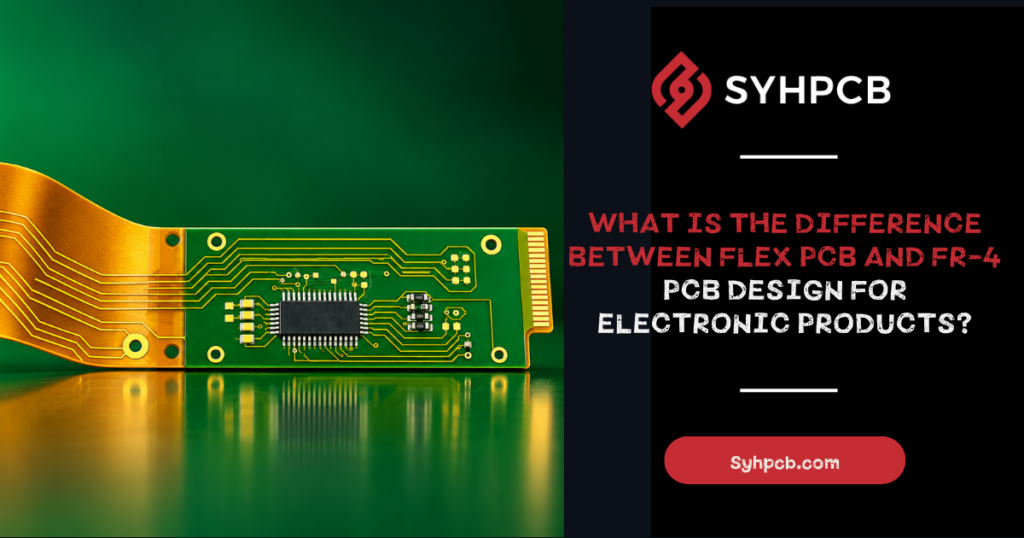
- Flexible PCB: Uses flexible insulating materials, typically polyimide, to accommodate bending and compact product designs.
- Heavy Copper PCB: Uses thicker copper layers for applications requiring higher current-carrying capacity.
The right option depends on product design, available space, electrical requirements, and operating conditions.
How to Choose the Right Copper or Multilayer PCB Manufacturer?
Before selecting a manufacturer, consider its ability to support different PCB structures, copper thicknesses, and customized fabrication requirements.
Check whether the manufacturer offers multilayer PCB fabrication, heavy-copper PCB production, impedance-controlled designs, flexible PCB solutions, and appropriate inspection procedures.
Established in 2007, SYH PCB (Shenzhen SYH Photoelectric Co.,Ltd) provides customized PCB and PCBA manufacturing solutions from Shenzhen, China.
Its manufacturing capabilities include FR4, aluminum, high-conductivity copper, multilayer, and impedance-controlled PCB configurations, along with SMT and mixed-technology assembly.
Serving customers across Europe, North America, South America, and Asia, SYH PCB works with businesses seeking customized circuit board manufacturing solutions.
Contact SYH PCB to discuss your copper PCB, heavy copper PCB, multilayer PCB fabrication, and assembly requirements.
Frequently Asked Questions
1. What is the difference between a standard copper PCB and a heavy copper PCB?
The main difference is copper thickness. Heavy copper PCBs use thicker copper layers and are designed for applications with higher current-carrying and power distribution requirements.
2. How many layers can a multilayer PCB have?
Multilayer PCBs can have different layer counts, including 4, 6, 8, 10, and higher configurations, depending on the manufacturer’s capabilities and project requirements.
3. What industries commonly use heavy copper PCBs?
Heavy copper PCBs are used in power electronics, automotive systems, industrial equipment, battery management systems, and power distribution applications.
4. What files are required for multilayer PCB fabrication?
Manufacturers commonly require Gerber files, drill files, stack-up information, board dimensions, copper thickness specifications, and other relevant manufacturing documents.
5. Can one PCB manufacturer provide copper, multilayer, and flexible PCB solutions?
Some manufacturers support multiple PCB technologies. However, customers should confirm the available materials, layer configurations, copper thicknesses, and flexible PCB fabrication capabilities before placing an order.