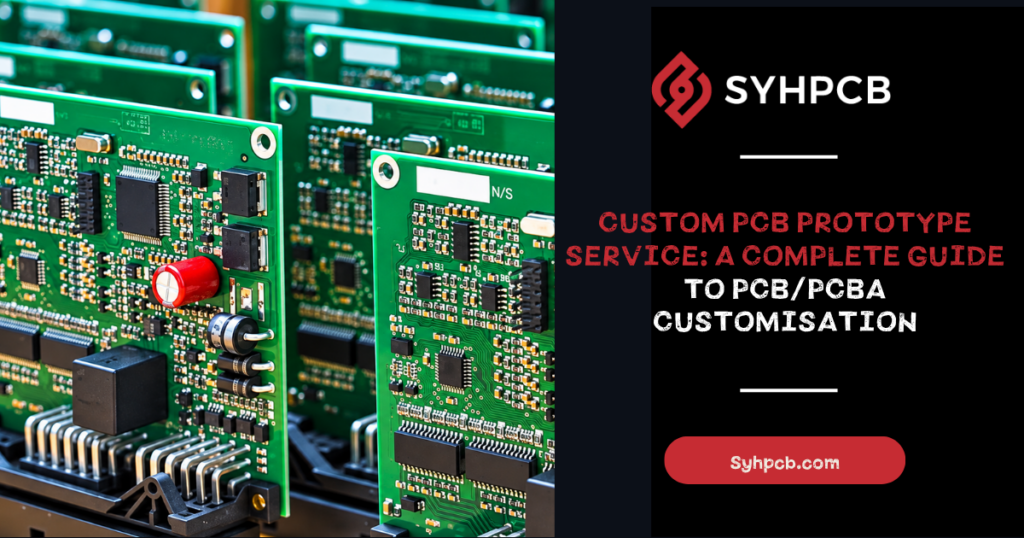
Developing a new electronic product requires more than a circuit design. It requires a reliable printed circuit board (PCB) that meets specific electrical, mechanical, and functional requirements and helps support product performance goals. Whether you are developing an industrial control system, consumer electronic device, medical electronic equipment, or communication product, choosing the right custom PCB prototype service is an important step in turning your concept into a working product with confidence.
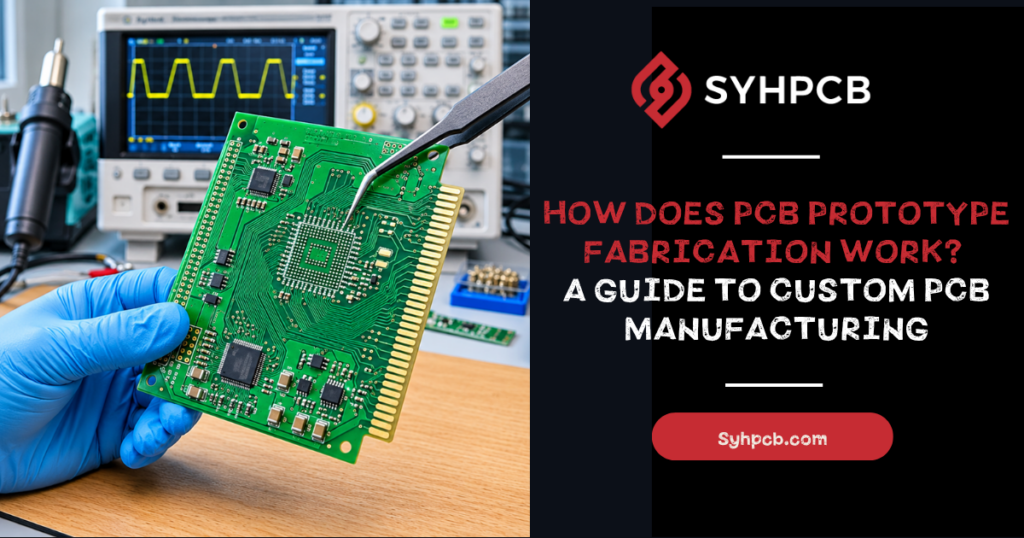
A custom PCB prototype lets engineers and product developers test circuit designs, evaluate performance, identify potential issues, and make necessary improvements before moving into mass production, reducing risk, improving launch readiness, and supporting faster decision-making.
With increasing demand for customised electronic solutions across Europe, North America, South America, and Asia, businesses need PCB manufacturing partners that understand different design requirements, material specifications, and production needs and can support efficient project delivery and dependable results.
SYH PCB (Shenzhen SYH Photoelectric Co., Ltd.) provides PCB and PCBA manufacturing solutions, supporting customised requirements for a range of electronic applications. Established in 2007, the company helps customers develop PCB prototypes and customised electronic manufacturing solutions, with practical support that moves projects forward.
In this guide, we explore how custom PCB prototyping works, the available customisation options, key manufacturing considerations, and how to choose a suitable PCB/PCBA manufacturing partner for your project.
What Is a Custom PCB Prototype Service?
A custom PCB prototype service involves designing, fabricating, and testing a printed circuit board according to a customer’s specific electronic requirements.
Unlike standard PCBs, which follow predefined designs and specifications, custom PCB prototypes are developed around the functionality, dimensions, components, and electrical requirements of a particular application.
A custom PCB prototype may include different board materials, layer configurations, copper thicknesses, surface finishes, component layouts, and manufacturing specifications.
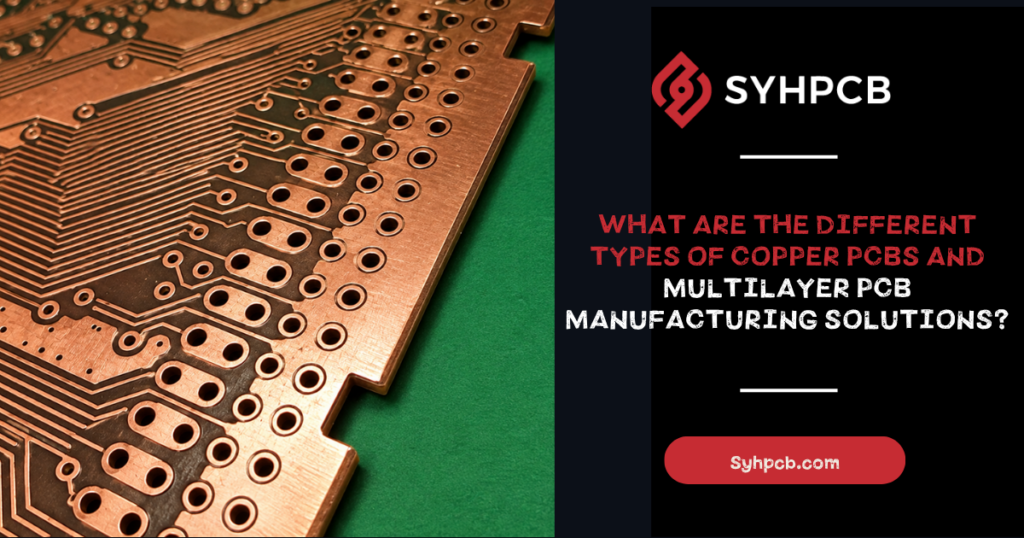
For example, an electronics company developing an industrial monitoring device may need a multilayer PCB with controlled impedance, while another company developing a power electronics system may need an aluminium PCB or a high-conductivity, copper-based board.
A professional PCB prototype manufacturing service helps transform these requirements into a physical board that can be evaluated before production begins, reducing uncertainty and supporting better product decisions. Next, it is useful to understand why custom PCB prototyping matters.
Why Is Custom PCB Prototyping Important?
PCB prototyping plays an important role in electronics product development. Building a prototype before large-scale production helps businesses evaluate designs, reduce manufacturing risks, and improve overall project readiness.
Here are some important benefits:
1. Verify Circuit Design Before Mass Production
A prototype lets engineers check whether their PCB design meets the intended specifications. It helps identify circuit errors, connection problems, and design limitations before committing to larger production quantities.
2. Reduce Product Development Risks
Manufacturing errors discovered during mass production can increase costs and delay product launches. Prototype testing helps identify potential issues earlier.
3. Support Customised Design Requirements
Different electronic products require different PCB configurations. Custom prototyping supports requirements for board dimensions, materials, copper thickness, layer count, and component placement.
4. Improve Product Performance
Testing a physical PCB allows engineers to evaluate electrical performance, thermal characteristics, signal integrity, and overall functionality.
5. Accelerate Product Development
A reliable prototype manufacturing process helps development teams evaluate designs, make revisions, and prepare for the next production stage with greater confidence. Next, the guide covers what PCB/PCBA customisation includes.
What Does PCB/PCBA Customisation Include?
PCB and PCBA customisation lets manufacturers produce boards and assembled electronic products to meet specific customer requirements and support application-specific performance goals.
The customisation process can cover several manufacturing areas.
1. Customised PCB Materials
Selecting the appropriate PCB material is important for electrical performance, durability, and thermal management.
Common PCB material options include:
- FR4 PCB: Widely used in consumer electronics, industrial equipment, and general electronic applications.
- Aluminium PCB: Suitable for applications that require effective heat dissipation, including LED lighting and power electronics.
- High-conductivity copper PCB: Used in applications that require specialised thermal and electrical characteristics.
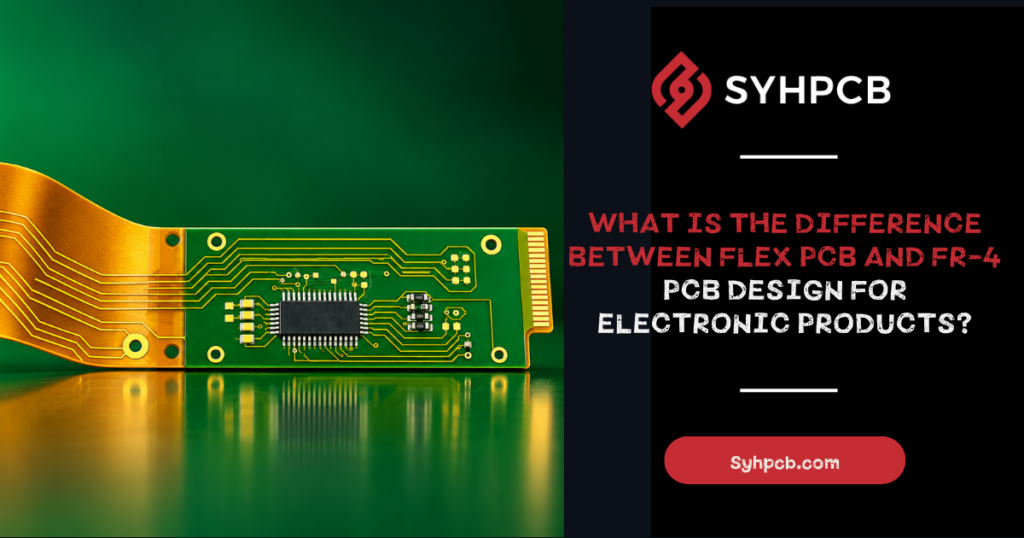
- Flexible PCB: Suitable for electronic products requiring flexible circuits or compact installation spaces.
Material selection should depend on the application’s operating conditions, electrical requirements, and thermal considerations.
2. Multilayer PCB Customisation
Some electronic products require more complex circuit designs than a standard single-sided or double-sided PCB can support.
Multilayer PCB manufacturing allows multiple conductive layers to be integrated into a single board.
Customisation options may include:
- 4-layer PCB
- 6-layer PCB
- 8-layer PCB
- Higher-layer-count PCB configurations
- Impedance-controlled PCB designs
- Customised stack-up structures
These configurations help support compact electronic designs, complex routing requirements, and signal integrity considerations.
3. Customised PCB Dimensions and Thickness
Every electronic product has different installation and space requirements. Custom PCB manufacturing supports specific board dimensions, thicknesses, shapes, and mechanical configurations.
This is particularly useful for compact electronic devices, industrial control systems, and specialised electronic equipment.
4. PCB Surface Finish and Copper Thickness
Surface finish and copper thickness influence PCB manufacturing quality, solderability, and electrical performance.
Depending on the application, customers may specify surface finishes such as:
- HASL
- Lead-free HASL
- AGREE
- Immersion silver
- OSP
Copper thickness can also be customised according to current-carrying and design requirements.
5. PCB Assembly (PCBA) Customisation
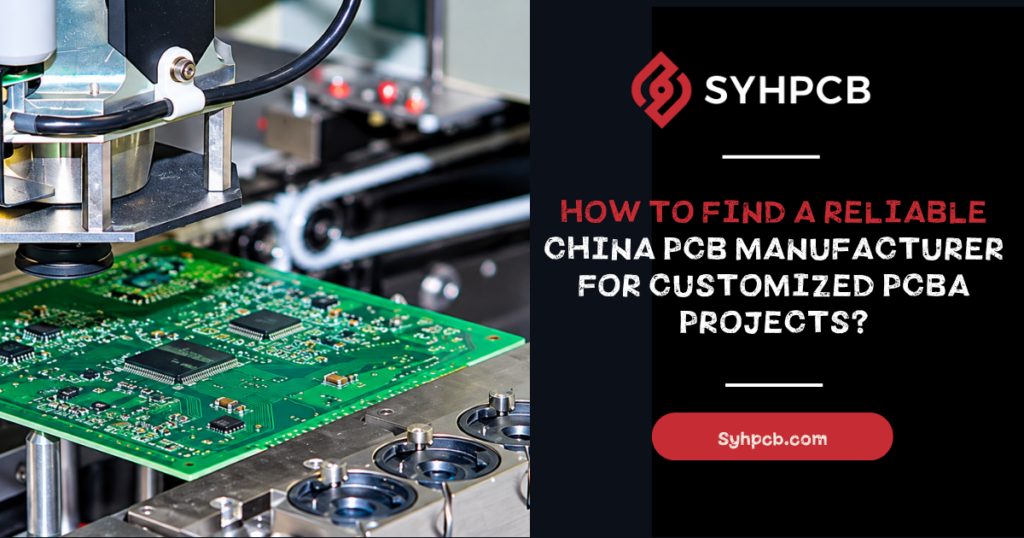
PCB assembly involves mounting electronic components onto a fabricated printed circuit board.
A customised PCBA service can include:
- Surface Mount Technology (SMT)
- Through-hole assembly
- Mixed-technology assembly
- Component sourcing
- Component placement
- Assembly inspection
- Functional testing, where required
The appropriate assembly method depends on the component types, board design, and intended application. With these options in mind, it is helpful to compare PCB prototyping and PCBA prototyping.
What Is the Difference Between PCB Prototyping and PCBA Prototyping?
Although PCB and PCBA are closely related, they represent two different stages of electronic manufacturing.
| PCB Prototype | PCBA Prototype |
| Focuses on manufacturing the bare circuit board | Includes assembling electronic components onto the board |
| Includes board fabrication and electrical connections | Includes soldering and component placement |
| Used to evaluate board structure and fabrication | Used to evaluate the assembled electronic circuit |
| Usually supplied without electronic components | Supplied with components assembled |
For businesses developing complete electronic products, combining PCB fabrication and PCBA services can simplify prototype development, streamline coordination, and support a more efficient path to testing.
How Does the Custom PCB Prototype Manufacturing Process Work?
A structured manufacturing process helps ensure that the final prototype meets the customer’s technical requirements.
Step 1: Share Your PCB Design and Requirements
First, provide the PCB design files, technical specifications, board dimensions, material preferences, and application details.
Gerber files are commonly used for PCB manufacturing. Other relevant design documents may also be provided depending on the project.
If customers need assistance preparing their design information, they should discuss available engineering support with the manufacturer.
Step 2: Design Review and Engineering Evaluation
Before manufacturing begins, the design should be reviewed for potential technical and manufacturing issues.
This may include checking:
- PCB dimensions and layer configuration
- Trace width and spacing
- Drill specifications
- Copper thickness
- Material selection
- Manufacturing tolerances
- Design for Manufacturability (DFM)
An appropriate design review can help reduce production errors and unnecessary revisions.
Step 3: PCB Fabrication
Once the design is approved, the PCB fabrication process begins.
Depending on the board structure, the manufacturing process may involve imaging, etching, drilling, plating, lamination, solder mask application, and surface finishing.
Step 4: PCB Assembly (If Required)
If the project requires a complete PCBA prototype, mount electronic components onto the fabricated board using the appropriate assembly technology.
SMT, through-hole, or mixed-technology assembly may be selected according to the design.
Step 5: Inspection and Testing
The manufactured prototype should undergo suitable inspection and testing based on the project requirements.
This may include automated optical inspection (AOI), visual inspection, electrical testing, and functional testing where applicable.
Step 6: Prototype Evaluation and Design Improvements
After receiving the prototype, engineers can evaluate its functionality and identify any required modifications.
Once the design is validated, the project can move toward low-volume production or larger manufacturing quantities. With this process complete, the guide now considers how to choose the right custom PCB prototype manufacturer.
How to Choose the Right Custom PCB Prototype Manufacturer?
Choosing the right PCB manufacturing partner affects product quality, development timelines, long-term manufacturing support, and your project’s overall success.
Before selecting a manufacturer, consider the following factors.
1. Manufacturing Experience: Look for a company with relevant experience in PCB fabrication and PCBA manufacturing.
2. Customisation Capabilities: Check whether the manufacturer supports different materials, layer configurations, board thicknesses, and specialised PCB requirements.
3. Quality Control: Ask about inspection procedures, testing capabilities, and quality management processes.
4. Prototype and Low-Volume Support: Choose a manufacturing partner that can accommodate prototype quantities and support future production requirements.
5. Engineering Support: Technical assistance with design reviews, manufacturing specifications, and DFM considerations can help simplify product development.
6. Communication and Global Support: For international customers, clear communication, documentation, and export coordination are important when working with an overseas PCB manufacturer.
Why Consider SYH PCB for Custom PCB Prototyping?
Established in 2007, SYH PCB (Shenzhen SYH Photoelectric Co., Ltd.) supports customised PCB and PCBA manufacturing requirements for customers developing electronic products across different industries.
Based in Shenzhen, China, SYH PCB works with customers seeking customised circuit board solutions, from prototype development through manufacturing.
Its manufacturing-related capabilities include support for different PCB technologies and configurations, such as FR4, aluminium, high-conductivity copper, multilayer, and impedance-controlled PCB requirements, along with SMT and mixed-technology assembly.
Customers can discuss their project requirements, including:
- Customised PCB and PCBA manufacturing.
- Different PCB materials and layer configurations.
- Prototype and low-volume manufacturing requirements.
- SMT and mixed-technology assembly.
- AOI inspection and applicable quality checks.
- Technical discussions for projects with specific design requirements.
For qualifying prototype submissions, customers can also inquire about available functional prototype offers.
Whether you are developing a new electronic product, improving an existing circuit design, or preparing for production, discussing your technical requirements with an experienced manufacturing partner is a useful starting point.
Contact SYH PCB to discuss your custom PCB prototype and PCBA customisation requirements. Share your design files, board specifications, and project details to explore a suitable manufacturing solution.
Frequently Asked Questions (FAQs)
1. What is included in a custom PCB prototype service?
A custom PCB prototype service generally includes PCB fabrication according to customer specifications. Depending on the selected service, it may also include engineering review, PCB assembly, inspection, and functional testing.
2. Can I order a customised PCB prototype in a small quantity?
Yes. Many PCB manufacturers offer prototype and low-volume manufacturing options. The minimum order quantity depends on the manufacturer’s capabilities, board specifications, and project requirements.
3. What files are required for custom PCB manufacturing?
Gerber files are commonly required for PCB fabrication. For PCBA projects, customers may also need to provide a Bill of Materials (BOM), pick-and-place files, and assembly drawings.
4. What is the difference between PCB and PCBA customisation?
PCB customisation involves producing the bare circuit board according to specific design requirements. PCBA customisation includes assembling electronic components onto the PCB to create a functional electronic assembly.
5. Can I customise PCB materials and layer counts?
Yes. Depending on the manufacturer’s capabilities, customers can specify FR4, aluminium, copper-based materials, and different layer configurations to suit their application.
6. How long does custom PCB prototype manufacturing take?
The manufacturing timeline depends on board complexity, material availability, layer count, fabrication specifications, and whether PCBA is required. Customers should request a project-specific production estimate.
7. Can a PCB manufacturer help if I do not have Gerber files?
Some manufacturers offer engineering or design support for customers who need assistance preparing manufacturing files. Contact the manufacturer to confirm what design documents are required and whether this support is available.
8. What quality checks are used for PCB prototypes?
Depending on the product and manufacturing process, quality checks may include visual inspection, automated optical inspection (AOI), electrical testing, and functional testing.
9. Can I get both PCB fabrication and PCBA assembly from one manufacturer?
Yes. Some manufacturers provide integrated PCB fabrication and PCBA assembly services. This can simplify coordination between board production and electronic component assembly.
10. How can I request a custom PCB prototype quotation?
Contact a PCB manufacturer with your Gerber files, BOM, board dimensions, layer count, material requirements, quantity, and delivery destination. These details help the manufacturer evaluate the project and prepare a suitable quotation.
Ready to Start Your Custom PCB Prototype Project?
Looking for a reliable partner for PCB/PCBA customisation? Contact SYH PCB to discuss your design specifications, prototype requirements, and electronic manufacturing needs.
Share your project details and explore customised PCB manufacturing solutions for your next electronic product.